
Normandy, France: When History Brings You to Your Knees
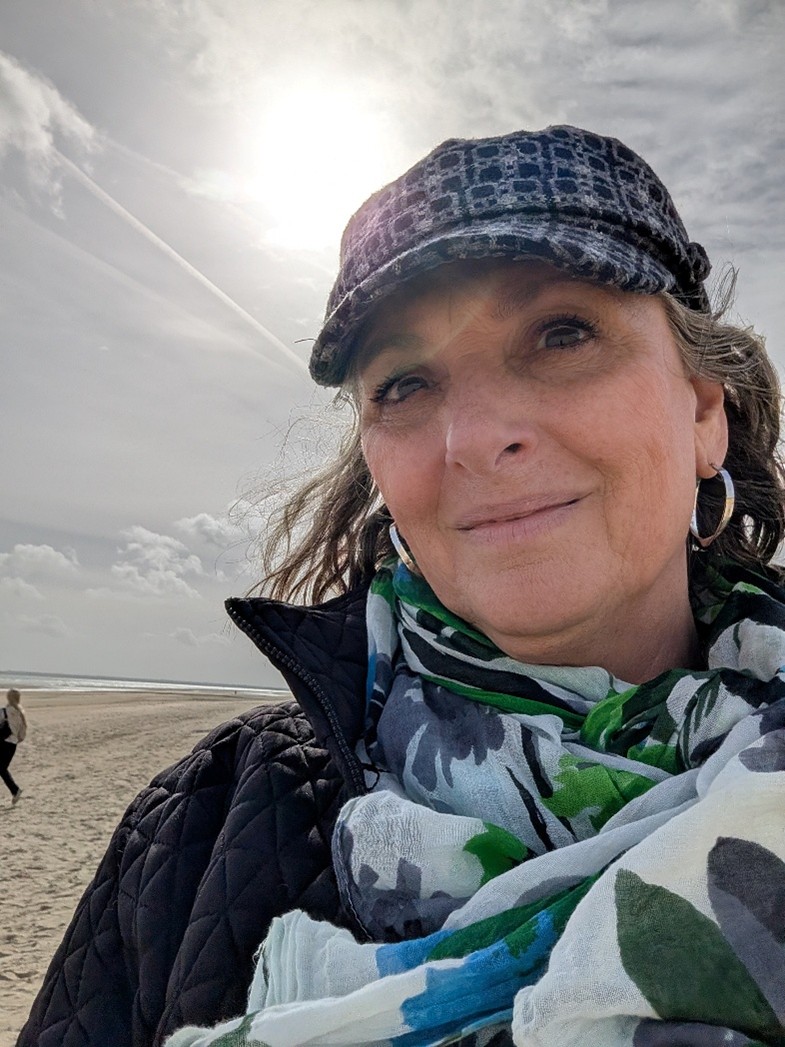
We travel for business, pleasure, wonder, it’s different throughtout our lives.When I traveled for business I can’t say I learned much about the areas I visited.Vacations where often about the natural beauty and beaches of the world.And then there are those times and then there are places that touch your soul so deeply that you leave carrying the weight of history.
For me, Normandy, France, is one of those places.This was my second visit to the historic beaches of Normandy, where thousands of young men fought and died during one of the most significant military operations in modern history.On my first visit, I explored the Canadian War Cemetery and stopped in the charming town of Bayeux.
This time, I visited the Normandy American Cemetery, overlooking Omaha Beach. And I wasn't prepared for how deeply it would move me.
D-Day: A Turning Point in History
On June 6, 1944, Allied forces launched what would become known as D-Day, the largest amphibious invasion in history. Nearly 160,000 troops, primarily from the United States, Britain, and Canada, took part in the operation to begin liberating Nazi-occupied Western Europe.They landed along five beaches on the northern coast of France: Utah, Omaha, Gold, Juno, and Sword.It was a monumental undertaking, planned in secrecy and carried out under extraordinarily dangerous conditions.
These young soldiers faced heavily fortified German defenses, rough seas, gunfire, and tremendous uncertainty. More than 10,000 Allied service members were killed, wounded, or reported missing that day. The invasion marked a critical turning point in World War II, helping set the stage for the liberation of France and, ultimately, victory over Nazi Germany.
But those are the historical facts.When you stand on the ground where it happened, the numbers begin to take on an entirely different meaning.
A Sea of White Crosses
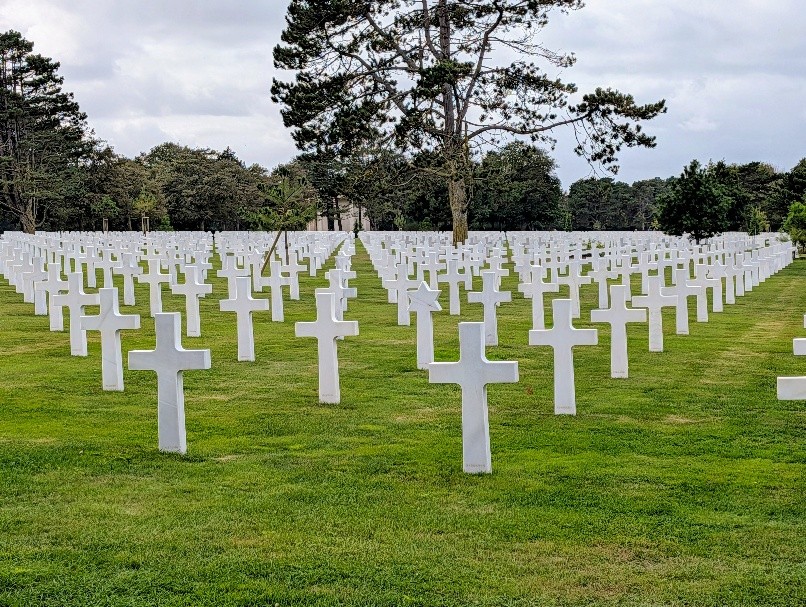
The Normandy American Cemetery is the final resting place of nearly 9,400 American military personnel, most of whom died during the D-Day landings and the battles that followed. Row after row of perfectly aligned white marble crosses and Stars of David stretch across beautifully manicured green lawns.The cemetery sits on a bluff overlooking Omaha Beach and the English Channel. It's peaceful, beautiful, and it's heartbreaking. As I walked among those graves, breathless, I couldn't help but think about the young men whose lives ended here.
They were sons. Brothers. Husbands. Sweethearts. Friends. Young men who had dreams of coming home, building careers, raising families, and living lives full of possibility.Some were barely old enough to have experienced adulthood.Yet here they rest, thousands of miles from the homes and families they left behind.I couldn’t help wondering how many of them had truly understood what awaited them on those beaches.Then my thoughts went to my grandpa Bud (Navy) , my dad, my uncle Ed (Army), and the service of my nephew Douglas, now in his 3rd year in the Airforce.
How frightened must they have been?How many whispered a prayer? How many thought of their mothers, their wives, or the sweethearts waiting back home?How many took their last breath hoping that their sacrifice would mean something?
It's impossible to walk through a cemetery like this without pausing, reflecting and feeling the enormous weight of what happened here.
We Stayed Till They Lowered The Flags and Played Taps
I don't know that I can adequately describe what happened inside me at that moment. First it brought me back to my grandfather and fathers funnerals. As I stood among those thousands of white crosses, the haunting notes of Taps began to play.And something in me just broke, I tried to hold back the tears, but I couldn't, for a moment, I honestly felt as though I might drop to my knees right there.There was something about that simple melody drifting across the cemetery that brought the enormity of the sacrifice into sharp focus.
I found myself asking questions that has no easy answer. Why do we human beings do so much to hurt one another?How does hatred become so powerful that we lose sight of our shared humanity?How do leaders convince people that other human lives are worth less than their own?How does the world allow evil to grow to the point that generations of young people must sacrifice their lives to stop it?
Standing there, I wasn't thinking about military strategies or political boundaries.I was thinking about people.And about the terrible price humanity pays when hatred, prejudice, and the desire for power are allowed to overcome compassion and respect for human life. It was one of those rare moments when words seemed entirely inadequate. All I could do was stand there, listen, and let the tears fall.
The Freedom We Too Often Take for Granted
I've been fortunate to travel to many countries around the world. I've walked through castles, explored ancient civilizations, visited magnificent churches, and stood in places where history changed the course of humanity. But places like Normandy remind me that the freedoms I enjoy today came at a tremendous cost. The freedom to travel, to speak up, to worship, to choose where we live. These are things we can so easily take for granted.
And while war memorials honor courage and sacrifice, I believe they should also challenge us to think about the kind of world we're creating today. Are we learning from our history? Are we teaching future generations the true cost of hatred and intolerance?Are we doing our part to create a world where differences don't have to lead to destruction? Lord knows, I don't pretend to have the answers.
But I do believe that remembering matters and perhaps one of the greatest ways we can honor those who lost their lives is to strive to live with greater compassion, humility, and respect for one another.
Why We Must Continue to Visit Places Like Normandy
The tide has shifted again, and I find travel isn't just about beautiful beaches, wonderful food, or checking another destination off the bucket list.Standing somewhere that makes me uncomfortable, somewhere that challenges my thinking , reminds me how fragile life can be and how deeply connected we all are, that's why I believe visiting historic sites is so important.
We can read about D-Day in textbooks. We can watch documentaries and see photographs of the soldiers storming the beaches.But standing there, looking out over the very coastline where it happened, changes something.History becomes personal as we think about our loved ones, our ancestors, and those that have paved the way for the world we live in today.History, might invite us to pave the way for future generations.
I left Normandy with tears in my eyes, gratitude in my heart, and a renewed appreciation for the extraordinary responsibility we have to protect the peace others fought so hard to secure. Because if we fail to learn from history, we risk repeating its most painful chapters.
A Bit of Insight: Remembering Is Not Enough
I often say that travel changes us.I leave home curious about the world, and more often than not I return having learned something about myselve.Normandy reminded me that life is precious. Freedom is precious. Peace is precious.And none of them should ever be taken for granted.
I cannot change what happened on those beaches in 1944. I cannot give those young men back the lives they lost or return them to the families who waited for them.But I can remember.I can share a small piece of their story.I can honor their sacrifice by choosing compassion over cruelty, understanding over judgment, and gratitude over indifference.Perhaps the greatest tribute we can offer those who died in war is to become people who work harder for peace.And perhaps that's why I was brought to tears that day, because sometimes the most powerful lessons in life aren't the ones we hear, they're the ones we feel so deeply that they bring us to our knees.
Live Well. Travel Far. Inspire Others.
— Lisa Mosbey


Mail
Facebook
LinkedIn
X
Pinterest